Energy and Heat Management in Tropical Fish Sauce Production Facilities
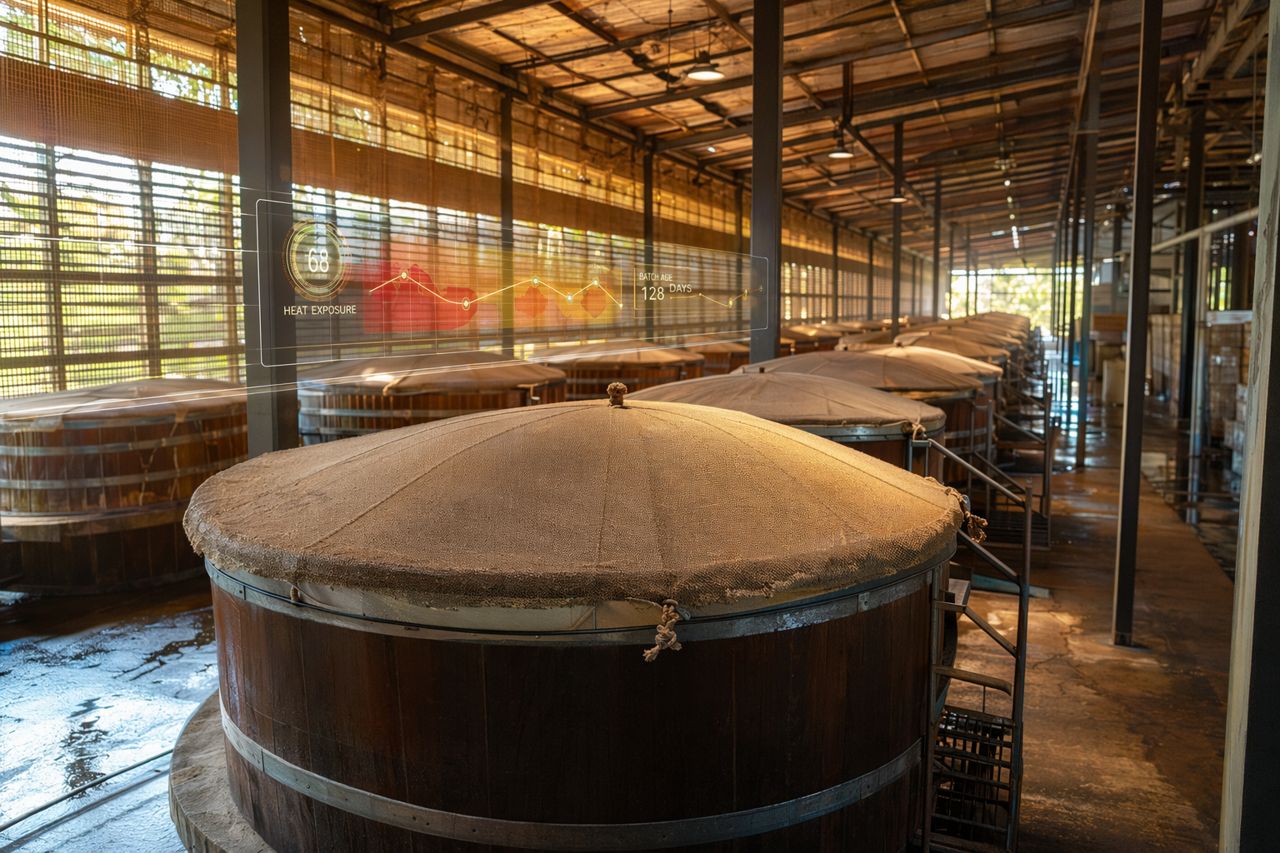
Tropical fish sauce plants work with two powerful forces at once: time and heat. Warm climates can support protein breakdown and aroma development, but unmanaged heat exposure can push a batch too hard, create uneven maturation, increase evaporation loss, and strain plant energy systems.
For fermentation managers, energy planning is not only a utility issue. It is part of batch control. Shade, airflow, tank placement, roof design, brine handling, sampling rhythm, and enzyme strategy all influence how consistently nitrogen is released and how steadily amber aroma develops.
SaltPulse Bioworks supports traditional fish sauce production with enzyme solutions designed for saline, plant-scale fermentation environments. As an enzyme supplier for fish sauce fermentation, we focus on practical outcomes: controlled protein breakdown, reduced batch variability, reliable maturation support, and smoother scale-up under real factory heat.
Why tropical heat changes the production conversation
Fish sauce fermentation has always depended on climate. In many heritage regions, sun, salt, fish, and time define the character of the final sauce. The challenge for larger facilities is not to remove this character, but to control the exposure so each tank follows a predictable path.
In tropical plants, heat can affect:
- Protein breakdown rate across different tank zones
- Nitrogen release consistency from batch to batch
- Aroma development during long maturation windows
- Brine concentration through evaporation
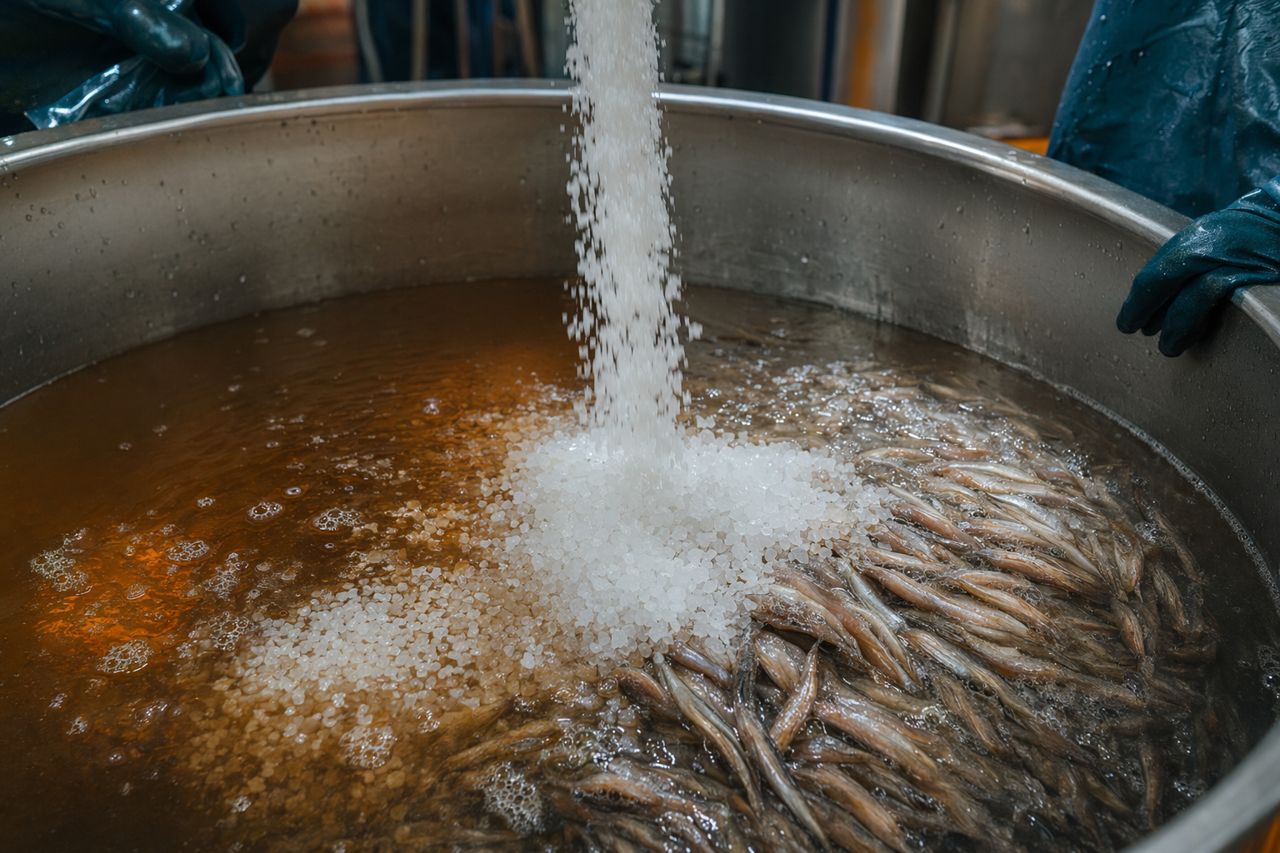
- Salt crystal behavior during early mixing and settling
- Tank wall temperature in direct sun
- Energy demand for ventilation, pumps, sampling rooms, and covered storage
A tank placed near a sun-facing wall may mature differently from one stored under deeper shade. A shallow vessel may respond differently from a tall vat. Even when the raw material and salt ratio are consistent, the thermal profile of the facility can create hidden variation.
Heat exposure is a batch consistency variable
Many factories monitor batch age, salinity, aroma, and nitrogen development, but heat exposure is sometimes treated as background weather. In tropical operations, it should be treated as a production variable.
Important questions for fermentation managers include:
- Which tanks receive direct radiant heat during the hottest hours?
- Are roof surfaces transmitting heat into fermentation areas?
- Do older and younger batches sit in zones with different airflow?
- Does evaporation concentrate brine faster in exposed areas?
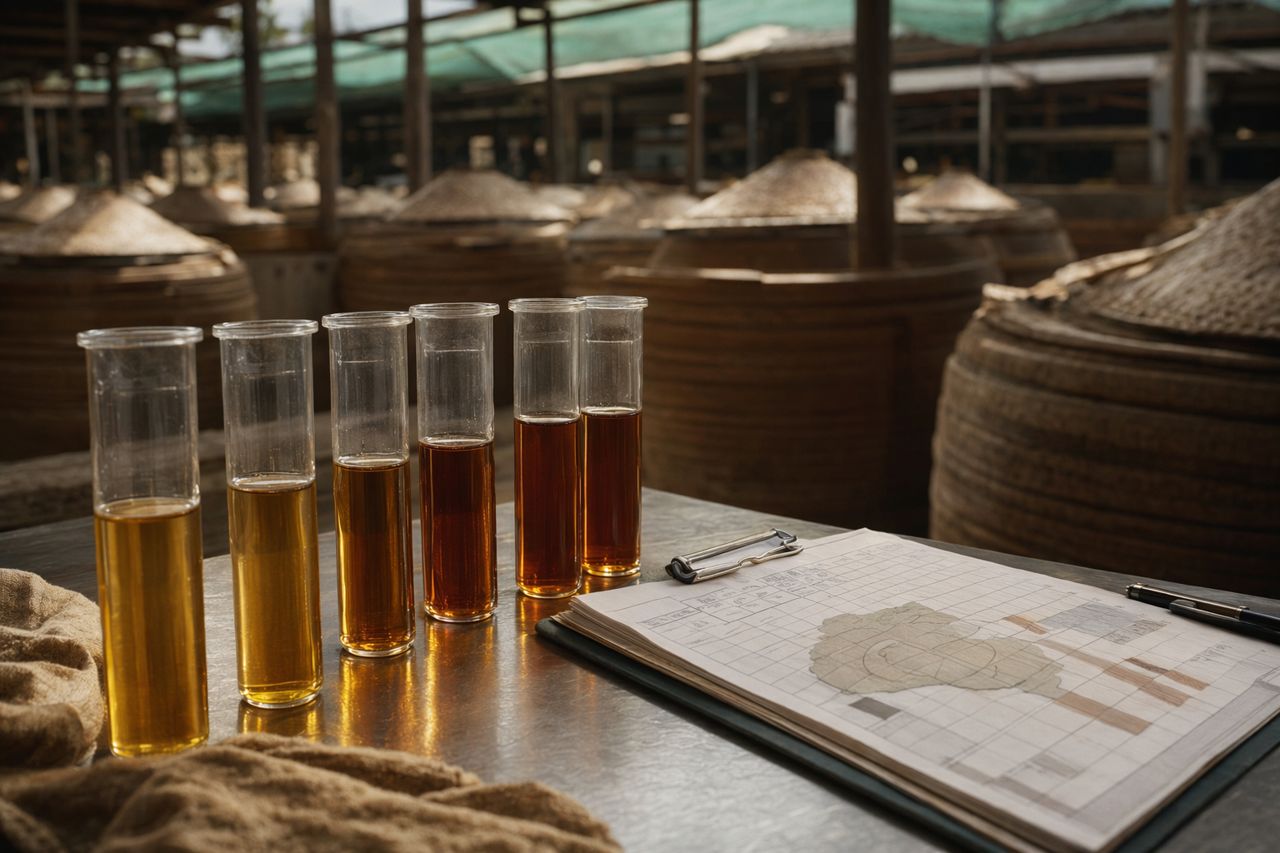
- Are operators sampling at consistent thermal conditions?
- Are enzyme-assisted batches showing stable maturation across seasons?
When these answers are documented, the plant can move from reactive troubleshooting to deliberate heat management.
Shade protects more than worker comfort
Shade is one of the most cost-effective tools in tropical fish sauce production. Proper shading reduces tank surface temperature swings, protects sampling stations, lowers evaporation pressure, and improves the working environment around fermentation zones.
Effective shade planning may include:
- Extended roof overhangs on sun-facing sides
- Insulated roofing above maturation tanks
- Shade screens that allow airflow without trapping heat
- Covered brine preparation and fish receiving zones
- Tank layout that separates early hydrolysis from intense radiant exposure
- Controlled natural light rather than direct sun on vessel walls
The goal is not to make the plant cold. The goal is to make heat exposure intentional and repeatable.
Airflow supports steady maturation
Airflow is often discussed as a comfort or odor-management issue, but it also supports production stability. In a warm, saline environment, stagnant zones can hold heat and moisture around vessels, while uncontrolled air movement can increase evaporation or carry odor into sensitive plant areas.
A balanced airflow plan should consider:
- Cross-ventilation without direct drying of open process areas
- Removal of trapped heat under roof structures
- Separation of raw material handling from maturation zones
- Air movement around tanks without disturbing covers or brine surfaces
- Reduced heat accumulation near pumps, motors, and walkways
For larger plants, airflow mapping can reveal why two tanks with the same recipe show different maturation patterns. The physical environment often explains what the batch record alone cannot.
Energy planning for tropical fish sauce facilities
Energy use in fish sauce factories is not limited to refrigeration or pumping. Tropical plants may consume significant power for ventilation, roof heat mitigation, lighting, odor management, brine transfer, cleaning systems, and worker-safe process areas.
A practical energy plan should connect utilities to batch performance. For example:
- Better roof insulation can reduce heat load in fermentation halls.
- Improved ventilation can reduce thermal hotspots without over-drying the area.
- Efficient pumps can support brine movement while reducing heat contribution.
- Covered staging areas can reduce spoilage pressure before salting.
- Well-placed sampling rooms can improve test consistency and operator workflow.
The strongest energy strategies are those that lower operating strain while improving fermentation predictability.
Where enzyme strategy fits into heat management
Enzymes do not replace traditional fermentation skill. They help make protein breakdown more controllable, especially when factories are managing seasonal heat, variable fish quality, and larger tank volumes.
In tropical fish sauce production, enzyme selection should account for:
- High-salt operating conditions
- Long maturation timelines
- Compatibility with desired aroma profile
- Controlled nitrogen release rather than harsh over-processing
- Stability under realistic plant temperatures
- Integration with existing salting, mixing, and maturation practices
SaltPulse Bioworks develops enzyme solutions for production teams that need dependable performance without sacrificing the slow-crafted identity of fish sauce. The intended value is operational: better batch uniformity, more predictable maturation support, and reduced uncertainty when heat exposure changes across the year.
Practical checklist: heat-aware fermentation management
Use this checklist when reviewing tropical plant operations:
Facility layout
- Map tanks by sun exposure, roof zone, and airflow path.
- Identify walls and corners that retain afternoon heat.
- Keep young batches out of the most variable thermal zones when possible.
- Separate receiving, salting, and maturation areas to reduce process stress.
Tank and storage control
- Compare temperature exposure between top, middle, and lower tank zones.
- Track evaporation patterns in shaded versus exposed vessels.
- Review cover design for heat retention, hygiene, and brine stability.
- Rotate or group batches based on thermal profile, not only age.
Process reliability
- Standardize sampling time and location.
- Review seasonal changes in aroma development and nitrogen release.
- Align enzyme use with actual plant temperature behavior.
- Document batch outcomes by zone to identify facility-driven variation.
Energy and utilities
- Audit ventilation for both worker safety and batch consistency.
- Reduce radiant heat before adding mechanical cooling where possible.
- Use shaded walkways and covered workstations to improve operator accuracy.
- Select equipment that supports brine transfer without unnecessary heat gain.
A heritage-aware approach to modernization
Fish sauce production is not a process to be flattened into a generic industrial schedule. The best factories preserve the sensory depth of fermented fish while improving control over the variables that cause avoidable inconsistency.
Heat management supports that balance. So does enzyme selection. When temperature exposure, airflow, shade, and enzyme performance are considered together, the plant gains a clearer path toward stable amber color, rounded aroma, reliable nitrogen release, and commercially dependable output.
Embedded explainer video
[Faceless 1-minute explainer video embed: energy and heat management for tropical fish sauce fermentation, with voiceover, on-screen subtitles, and cinematic still-frame sequences. No avatar or presenter.]
Work with SaltPulse Bioworks
If your facility is reviewing tropical heat exposure, maturation variability, or enzyme integration for salted fish fermentation, SaltPulse Bioworks can help assess the production context and recommend a fit-for-purpose solution.
Request a quote through the on-site contact form and include your fish species, salt range, vessel type, maturation target, and current production challenge. Our team will respond with a practical recommendation for your plant conditions.